
A Collection of Health-Preserving Exercises for Men: Key Points and Disease-Preventing Principles of Qigong, Wild Goose Exercise, and Strengthening Exercise
Qigong includes basic exercises such as the Six Healing Sounds, the Marrow Cleansing Classic, and Tai Chi. The Six Healing Sounds can prolong life. Its basic principle is "to exhale and expel toxins from the internal organs, and to inhale and absorb the pure Qi of heaven and earth to replenish them." By exhaling and reciting the sounds, producing different sounds and exhaling different airflows, different organs are vibrated or activated to regulate and nourish the five internal organs and achieve the purpose of disease prevention and health maintenance.
While exhaling, pronounce the six words "Xu," "Hu," "Yan," "Chui," and "Xi" respectively, accompanied by guided movements. Follow the abdominal breathing pattern, inhaling unconsciously but exhaling intentionally. When inhaling, keep your mouth closed, tongue touching the roof of your mouth, and breathe naturally through your nose, allowing your lower abdomen to rise naturally. When exhaling, exhale through your mouth while pronouncing the words, contracting your anus, abdomen, and kidneys. The mouth shape varies depending on the word. The "Xu" sound exercise treats liver disease, while the "He" sound exercise replenishes and regulates the Qi of the Triple Burner. The entire set of exercises is based on the preparatory stance, which requires standing relaxed and still, with the head suspended as if suspended, the Baihui point facing upwards, eyes focused, and mind not wandering.
Tongue against the roof of the mouth, shoulders relaxed and elbows dropped, chest closed and back straight, waist relaxed and hips lowered, elbows slightly bent, feet shoulder-width apart, knees slightly bent, all muscles relaxed, mind calm and natural, avoiding any exertion. Stabilize emotions and eliminate distracting thoughts. Next, adjust breathing to make it even, fine, and natural, and begin practicing the exercises. The Marrow Cleansing Meridian exercises activate from head to toe, moving all joints and allowing the vital energy to circulate throughout the body's tissues and organs, clearing the joints and exerting a holistic therapeutic effect.
The Marrow Cleansing Classic, based on the needs of physiological activities and the flow of Qi and blood in the meridians, is composed of 22 postures. The entire set of movements requires natural, abdominal breathing. Inhale and exhale through the nose; exhale intentionally, contracting the lower abdomen, kidneys, buttocks, and anus; inhale unintentionally, aiming for ease and naturalness. The speed of the movements should be naturally governed by the rhythm of breathing, remaining relaxed and gentle, avoiding stiffness or rigidity. Mental activity should be subtle and almost imperceptible; physical movements should proceed naturally with the rhythm of breathing. The mind should not be forced, but it can guide the movements, using the movements to guide the circulation of Qi and blood in the meridians.
Before practicing, perform a preparatory stance to calm your mind. The routine includes: rotating the Baihui point (crown of the head), pressing the bridge of the nose, massaging the Yingmai point, massaging the eyes, pressing the Tongzi Lao point and temples, dry rubbing the face, dry combing the hair, massaging the Fengchi point, grasping the Yuzhen point (on the back of the head), striking the Tiangu point (on the head), opening the ear canals, massaging the Tingguan point (on the ears), clenching the teeth, neck exercises, finger and wrist exercises, elbow exercises, shoulder exercises, extending the arms and widening the chest, the Shenlong Wenzhu point (a specific acupoint), waist and hip exercises, rotating the knees, and foot exercises. The basic principles of Tai Chi are relaxation, stillness, and naturalness, guided by intention. Where the intention goes, the energy follows. The entire routine requires upright, rounded postures, with the waist leading the limbs, the tailbone centered, allowing the spirit to penetrate to the crown of the head.
During practice, it is important to pay attention to adjusting breathing, concentrating the mind, relaxing muscles, supporting the head from the crown, slightly concave the chest and straightening the back, sinking the shoulders and dropping the elbows, straightening the spine and relaxing the waist, lifting the anus and adopting a light stance, clearly distinguishing between yin and yang, maintaining a stable center of gravity, and sinking the qi to the dantian. This set of exercises is choreographed to imitate the form and movements of a wild goose. It combines strength and gentleness, movement and stillness, and is relaxed and natural, with the effects of clearing the mind and refreshing the eyes, promoting blood circulation, and strengthening the body. The entire set of movements is graceful and easy to master, with little chance of error, and has good effects, thus it is very popular among the public.
The complete set of movements consists of sixty-four sections, named as follows: Starting Posture, Spread Wings, Close Wings, Fold Nest, Shake Shoulders, Fold Nest, Shake Waist, Raise, Close Palms, Turn Palms, Lower Back (Middle, Left, Right), Wrap Hands, Return Breath, Left Feet Flick, Push Breath, Scoop Breath, Turn Voice and Return Breath, Right Feet Flick, Push Breath, Scoop Breath, Flick Hands, Cloud Hands (Right, Left, Right), Swing Waist, Lower Shoulders and Return Breath, Single Wing Spread, Step Forward and Extend Shoulders, Wrap Head and Ears, Press Down, Lift Up, Return Breath, Scoop Moon, Turn Around, Step Forward and Look at the Moon, Press Breath, Turn and Press Breath, Swim Movement, Look Over the Water, Splash Water and Fly Wings (Left, Right, Left), Drink Hands, Look at the Sky, Return Breath, Grab Breath, Turn Palms and Embrace Breath, Hold Ball, Knead Ball, Turn and Knead Ball, Hold Breath, Circulate Breath, Raise Shoulders, Turn Wings, Carry Wings, Raise Fan and Fly Up, Turn Around, Fly Up, Fly Over Water, Turn Around, Fly Up, Seek Food, Turn Around, Seek Nest, Turn Swim Movement, Sleep and Return Breath, Closing Posture.
Throughout the practice, the lips should be lightly closed, the tongue lightly touching the upper palate, and breathing natural. Consistency is key to achieving good results from practicing Wild Goose Exercise. This is a holistic self-therapy, primarily suitable for neurasthenia, primary hypertension, tuberculosis, constipation, and general weakness. The strengthening exercise is similar to the internal nourishment exercise, with sitting, lying, standing, and free-form postures. The lying posture, except for the breathing method, is identical to the internal nourishment exercise. Sitting upright is also the same as the internal nourishment exercise. When sitting cross-legged, one should sit on a soft, thick mattress or cushion to avoid fatigue.
In a single lotus position, place your right calf on your left calf, and your left calf on your right calf. In a double lotus position, place your right calf on your left calf, then lift your left calf and place it on your right calf, with the soles of your feet facing upwards on your thighs. In a natural cross-legged position, sit with your legs naturally crossed, your lower legs forming a V-shape. When standing, keep your head upright, legs shoulder-width apart, slightly bent, and hands slightly bent and placed in front of your lower legs, or at your chest as if holding a ball, with your arms bent and hands about an inch apart, prioritizing natural comfort.
There is no fixed posture in freestyle breathing. There are three breathing methods: quiet breathing (breathing naturally through the nose, aiming for even, slow, and gentle movements); deep breathing (gradually aiming for quiet, deep, long, and even breathing); and reverse breathing (inhaling while expanding the chest and contracting the abdomen, and exhaling while contracting the chest and expanding the abdomen). Focus your mind on the "Dantian" or Qihai acupoint (one and a half inches below the navel). Beginners can eliminate distractions and concentrate by silently counting breaths. Gradually, focus your attention on the point one and a half inches below the navel.

Men's Health Class: Analyzing the Stages of Adolescent Sexual Psychological Development and Guidelines for Healthy Interpersonal Relationships
This article on men's health guides you through the three stages of adolescent sexual psychology, from the onset of sexuality to romantic relationships. By analyzing the physiological and emotional needs of different age groups, it provides scientific advice on men's health, guiding young people on how to rationally manage psychological impulses and establish noble and civilized views on interactions with the opposite sex.
2026-03-27
Men's Health Encyclopedia: In-depth Analysis of Physiological Differences and Psychosomatic Characteristics Between Men and Women
This article on men's health analyzes the physiological differences between men and women from the perspectives of genetics, anatomy, and metabolism. It delves into the development of strong will and ambition in men's health, helping you scientifically understand gender characteristics and comprehensively improve your physical and mental well-being and self-esteem.
2026-03-27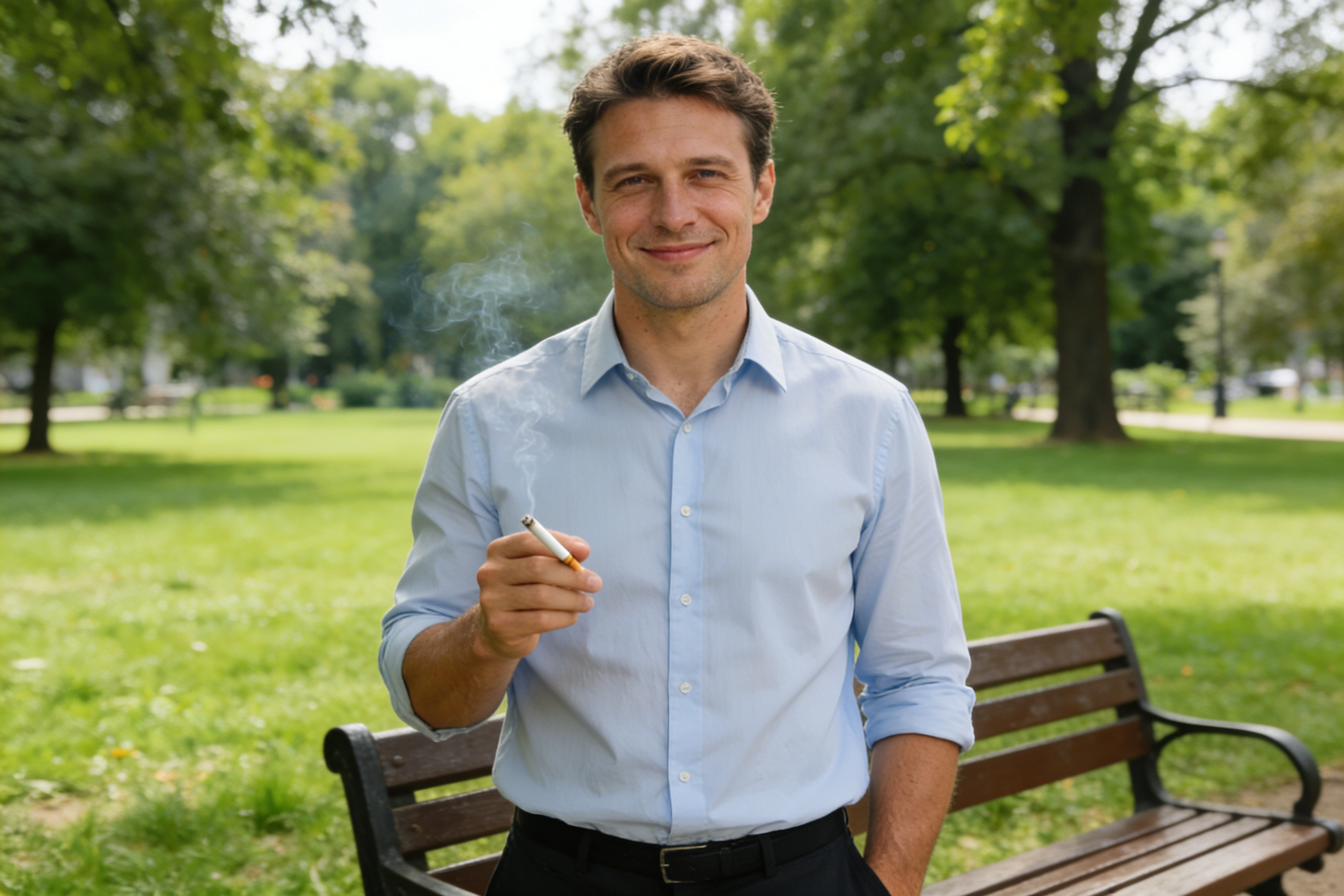
Men's Health: In-depth Analysis of the Psychological Triggers, Harmful Components, and Health Threats of Smoking
This article on men's health explores the psychological misconceptions surrounding smoking at different ages and analyzes the toxic effects of over 1200 harmful substances, including nicotine, tar, and benzo[a]pyrene, on the body. By revealing the deep damage smoking inflicts on the respiratory tract and cells, it helps you dispel the illusion of "energizing" and "socializing," and scientifically begin your journey to quit smoking.
2026-03-24