
Classification and treatment of penile trauma and nine common penile diseases affecting sexual life
The penis is located in a concealed position and cannot be moved significantly under normal circumstances. Its corpora cavernosa are flexible and covered by a tough tunica albuginea, making it generally difficult to cause injury. However, it can be injured when subjected to direct force such as external impact or straddling. Although there are no precise statistics on penile trauma, experts say that about 5% of men may experience some form of penile injury.
(1) Risk factors and timing of penile trauma: Sexual activity often creates opportunities for penile swelling and fracture, especially when the movement is too vigorous or the penis is subjected to heavy pressure from a woman's body; while riding a bicycle or practicing martial arts; when taking off pants or pulling the zipper to urinate; when moving objects with sharp edges; when bitten or squeezed by a dog; and when injured by a knife, arrow, or gun. (2) Age at which penile injury is most likely to occur: Men aged 20-40 who have frequent sexual activity and are very active are most likely to suffer penile injury. (3) Symptoms of penile trauma: The severity of penile trauma varies depending on the direction and magnitude of the external force. The main symptoms include pain, swelling, hematuria, and urinary obstruction.
Besides penile fracture, which has already been discussed, other possible penile injuries include: ① Penile contusion. This is often caused by blunt force during penile erection. Mild cases result in purplish-blue ecchymosis, while severe cases can lead to subcutaneous, corpus cavernosum, or glans hematoma, causing severe pain. During the wedding night, forceful penetration can cause lacerations to the foreskin or frenulum, or abrasions or edema of the foreskin and glans. Mild cases generally only require rest, using a T-bandage to support the scrotum and penis. If bleeding persists in the acute phase, cold compresses can be applied; after bleeding stops, warm compresses can be used to promote hematoma absorption. Antibiotics may be administered if necessary to prevent infection. Severe cases may require puncture or incision to drain the blood. If necessary, the bleeding point may be ligated, and the corpus cavernosum gently squeezed to prevent hematoma liquefaction. If treatment is delayed, and the hematoma liquefies or develops into an abscess or emphysema, incision and drainage or puncture to drain the pus may be necessary. Do not delay seeking medical attention, as this may worsen the condition or lead to late-stage pathological changes.
② Penile dislocation injury. The penis may become twisted during erection, or be subjected to blunt force trauma, excessive traction, or straddle injury during flaccidity, causing it to detach from the skin and dislocate to the groin or scrotum/perineum. Treatment involves hemostasis, manual reduction, and suture fixation to the penis in its normal position.
③ Paraphimosis. This often occurs due to curiosity, abnormal sexual desire, or quirks, where metal rings, plastic bands, or even large nuts are placed on the penis and not removed promptly, or the foreskin is retracted and not immediately returned to its original position. This causes impaired peripheral blood circulation in the constricted area, restricting venous return and leading to edema. In severe cases, it can even block arterial blood supply, causing tissue necrosis. The key to treatment is to remove the foreign object as soon as possible (e.g., sawing off the metal ring or nut), or to surgically relieve the paraphimosis. A foreskin that is too long or too tight can also cause paraphimosis during intercourse; in such cases, immediate medical attention is necessary.
④ Penile amputation. Wounds from battle, sharp objects, dog or livestock bites, etc., can all cause penile amputation. If the amputation was recent and the edges are clean, replantation surgery can be performed promptly, often preserving some erectile function.
⑤ Open lacerations. Commonly seen in industrial and mining areas, requiring timely debridement and suturing.
⑥ Penile skin avulsion injury (tear injury). Because the penile skin is thin and the subcutaneous tissue is loose, it can be caught and entangled by machinery and torn off, while the deep fascia of the penis remains intact. If the avulsed skin is still connected to the normal tissue and has a good color, it can be preserved as much as possible during debridement, and the chance of survival after suturing is high; if it is completely avulsed, skin grafts from other parts of the body can be used.
⑦ Penile skin pinched. It's easy to get pinched by zippers when putting on or taking off pants or urinating. To avoid this, firstly, always wear underwear or shorts; secondly, be careful when unzipping zippers; and thirdly, if the penis does get pinched, apply a little vegetable oil to the zipper.
Although there are many types of penile diseases, the most common ones that affect sexual life are as follows: (1) Epispadias or hypospadias: Epispadias refers to a defect in the upper wall of the penile urethra; while hypospadias refers to a defect in the lower wall of the penile urethra. When there is a defect in the urethral wall, the position of the urethral opening is also abnormal. Some are located on the dorsal side of the penis, some "run" to the ventral side of the penis, and some even appear in the scrotum or perineum, making the shape of the penis abnormal. As a result, urine leakage or abnormal urine flow direction occurs during urination. Sexual intercourse is impossible, and semen cannot enter the female's body. These diseases generally require surgical correction before sexual intercourse and childbirth can be performed.
(2) Penile tuberculosis: This mainly occurs through direct contact of the penis with Mycobacterium tuberculosis, and often occurs on the glans penis, frenulum, or urethral meatus. Initially, it appears as a small, hard nodule without any discomfort, and patients often do not pay attention to it. Later, the nodule ruptures, forming a well-defined ulcer with a burrowed edge, surrounded by infiltrated induration, and with granulation tissue or caseous necrotic tissue at the base. The ulcer can gradually enlarge, invading the entire glans penis or penile shaft, and may become enlarged due to secondary tuberculosis infection, making sexual intercourse impossible.
(3) Penile papilloma: Phimosis or redundant foreskin, coupled with infrequent cleaning of smegma, can lead to chronic inflammation within the foreskin cavity, resulting in penile papilloma. It manifests as multiple soft, rough-surfaced nodules on the coronal sulcus, glans penis, and foreskin, some resembling rapeseed flowers. Patients generally experience no pain, only penile itching, which can lead to infection after scratching. Local ulceration and foul-smelling discharge may occur. While erection is possible with sexual stimulation, pain may occur, reducing libido. Penile papilloma can become cancerous, so early complete tumor removal or electrocautery is necessary, along with circumcision.
(4) Penile cancer: A common malignant tumor of the penis, most frequently occurring in individuals over 35 years of age, often associated with phimosis or redundant foreskin. It commonly appears near the glans penis, foreskin, frenulum, and coronal sulcus. In patients where the foreskin can be retracted, lesions such as eczema, blood blisters, erythema, nodules, and ulcers may be observed; in patients where the foreskin cannot be retracted, the cancer is often discovered later, with the patient feeling a hard lump on the glans penis, accompanied by pain, inflammation, and purulent discharge from the foreskin opening. Sometimes, a cauliflower-like tumor can be seen at the foreskin opening, which, after penetrating the foreskin, exposes the entire tumor. The surface of the cauliflower-like tumor has a foul-smelling inflammatory exudate. Due to the fragility of the cancerous tissue, contact bleeding occurs, making sexual intercourse impossible.
(5) Penile elephantiasis: This is a disease caused by filarial worms blocking the lymphatic vessels, resulting in the extravasation and accumulation of large amounts of lymph fluid in the scrotum and penis. The penis becomes thick and hard, affecting urination and hindering erection, leading to difficulties in sexual intercourse. The solution is to remove excess and hardened skin and subcutaneous tissue from the penis and perform reconstructive surgery.
(6) Congenital micropenis: After puberty, the average length of the penis can reach 6-9 cm. The length can increase by about 100% when erect. Congenital micropenis is much smaller than the normal standard. People with congenital micropenis often have endocrine disorders such as testicular hypoplasia. Male sexual characteristics such as beard, Adam's apple, and pubic hair are not obvious in these people. They cannot achieve an erection, have nocturnal emission, cannot have sexual intercourse, and are infertile.
(7) Penile curvature: There are two causes: one is that the frenulum, the tissue between the urethral opening and the base of the foreskin, is too short congenitally; the other is that too much foreskin is removed during surgery to treat phimosis or paraphimosis. In both cases, penile curvature can occur during erection, and in severe cases, sexual intercourse may be impossible.
(8) Peyronie's disease: More common in middle-aged men, one or more small lumps grow on the penis inexplicably, in the form of cords, which may be related to penile trauma, causing local fibrous tissue hyperplasia. It can lead to penile erection pain or penile curvature. In particular, erection pain can reduce libido, induce impotence or anejaculation, and inevitably affect sexual life and fertility.
(9) Penile deviation: If one side of the corpus cavernosum is underdeveloped, the corpus cavernosum will be filled with blood differently when the penis is erect, and the penis will become crooked or even twisted, which will undoubtedly affect sexual life.
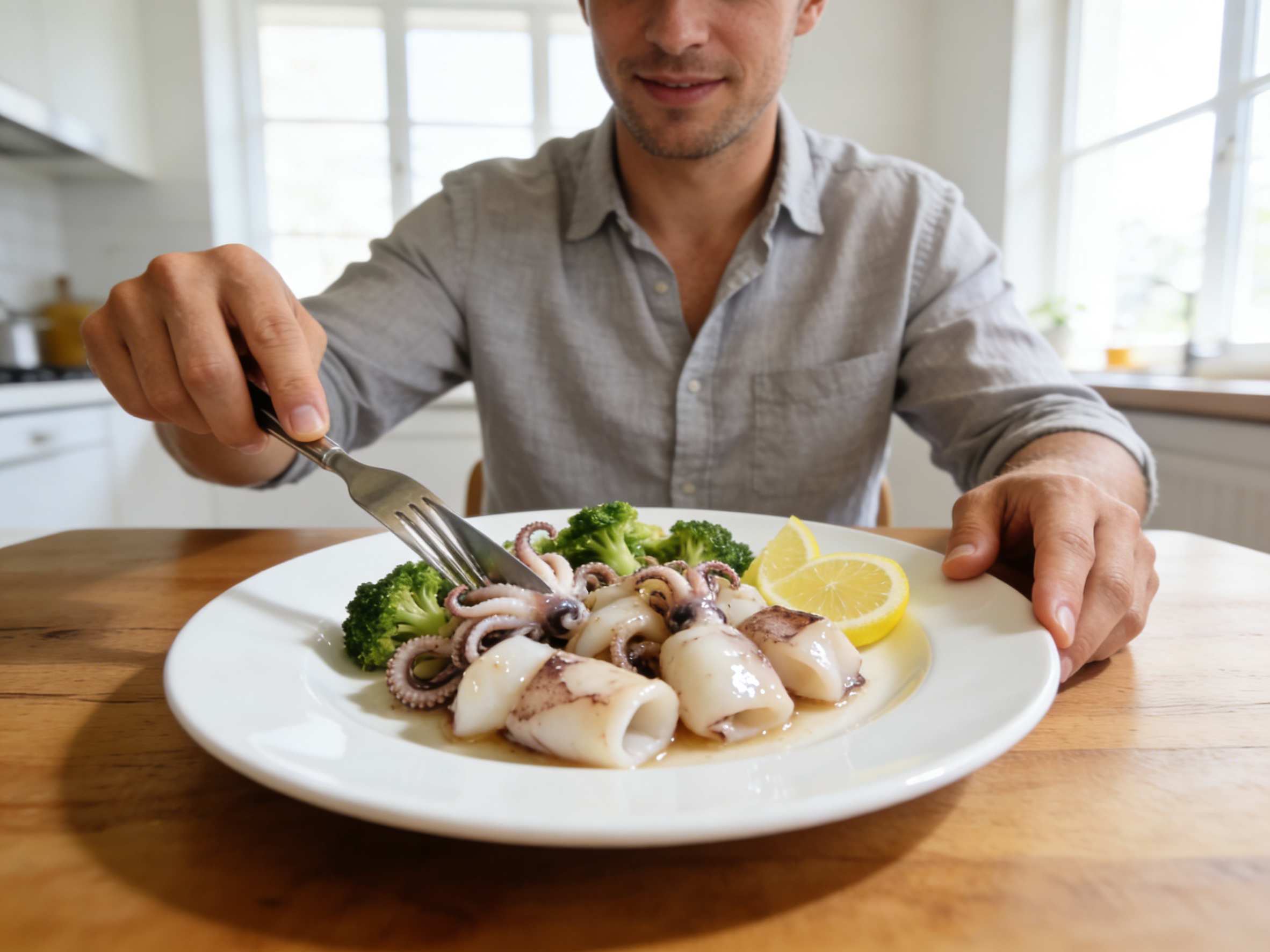
The medicinal effects of turtle, cuttlefish, and carp: A health-preserving diet for men that nourishes essence and blood.
Explore the nutritional value of turtles, squid, and carp. As high-quality male health foods, these ingredients have the effects of nourishing blood and replenishing essence, effectively improving nocturnal emission and impotence. Through scientifically combined medicinal cuisine, you can enjoy delicious food while achieving effective male health maintenance and physical enhancement.
2026-03-24
The medicinal effects of mandarin fish, crucian carp, and snakehead fish: A nutritional guide for men's health, tonifying deficiency and replenishing qi.
This article delves into the nutritional value of mandarin fish, crucian carp, and snakehead fish. These neutral-natured ingredients are not only delicious but also excellent health foods for men, known for their invigorating and restorative effects. Through scientific fish-based dietary therapy, they can effectively help treat impotence and premature ejaculation, making them an excellent choice for daily men's health and overall well-being.
2026-03-24
The medicinal effects of eel, sea bass, and loach: A guide to male health through diet to strengthen the kidneys and enhance sperm quality.
Learn more about the nutritional value of eel, sea bass, and loach. As excellent male health foods, they are rich in selenoproteins, which have significant effects in nourishing the body, strengthening the kidneys, and enhancing sperm quality. Through scientific medicinal diet therapy, they can effectively treat erectile dysfunction and premature ejaculation, making them ideal choices for daily male health maintenance and enhancing vitality.
2026-03-24